
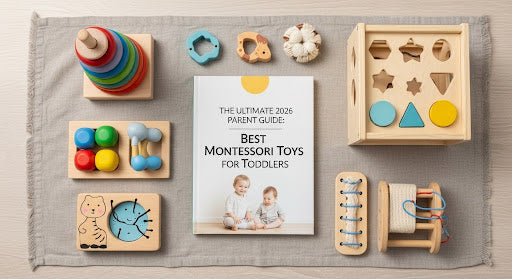
Best Montessori Toys for Toddlers – The Ultimate 2026 Parent Guide
Every parent wants the best for their child, toysbubu especially during the formative toddler years. At this stage, toddlers are naturally curious, exploring the world with their senses, hands, and minds. Choosing the right toys is not just about keeping them entertained; it is about fostering their natural curiosity, encouraging independent thinking, and promoting early learning. This is why Montessori toys for toddlers have gained immense popularity across the United States. These toys combine education and play in a way that nurtures cognitive, motor, and emotional development while remaining engaging and enjoyable. Unlike conventional toys that often prioritize amusement, Montessori toys are intentionally designed to support growth in multiple dimensions while allowing children the freedom to explore and learn on their own terms.
Understanding Montessori Toys
Montessori toys are based on the educational principles developed by Dr. Maria Montessori in the early 20th century. Her approach emphasized hands-on learning, self-directed activity, and exploration of the environment. The core idea is that children absorb knowledge naturally through interaction with objects and their surroundings. Montessori toys are carefully designed to provide experiences that challenge toddlers while remaining age-appropriate. A simple wooden shape sorter, for example, is not just a play item but a learning tool. It helps toddlers recognize shapes, understand spatial relationships, develop hand-eye coordination, and practice problem-solving. Montessori toys are characterized by simplicity, durability, and open-ended possibilities. They often replicate real-life objects or natural materials, helping toddlers connect play to their daily experiences. Their clean, uncluttered design prevents overstimulation and allows children to focus on the learning process rather than being distracted by bright colors or flashing lights. These qualities make Montessori toys ideal for fostering holistic early childhood development and instilling a lifelong love of learning.
Why Montessori Toys Are Important for Toddlers
Montessori toys provide a strong foundation for toddlers' growth, offering benefits across cognitive, motor, emotional, and social domains.
Cognitive Development
Toddlers are natural learners. Montessori toys provide stimulating challenges that improve concentration, memory, and critical thinking. Puzzles, stacking toys, and matching games challenge children to focus and experiment with solutions, helping to strengthen memory and logical thinking. Toddlers learn through trial and error, developing confidence in their ability to find answers independently.
Fine Motor Skill Enhancement
Manipulating Montessori toys helps toddlers develop hand-eye coordination, dexterity, and control over movements. Activities such as threading beads, sorting objects, or building blocks strengthen fine motor skills, which are vital for everyday tasks such as feeding, dressing, and eventually writing. Montessori toys offer opportunities for repeated practice in a playful setting, allowing toddlers to refine their motor abilities naturally.
Encouraging Independent Learning
One of the most important benefits of Montessori toys is fostering independence. By allowing toddlers to explore without constant adult guidance, they develop decision-making abilities, confidence, and a sense of achievement. This self-directed approach encourages curiosity, problem-solving, and personal initiative.
Emotional and Social Development
Montessori toys also help toddlers develop patience, focus, and social skills. When playing with siblings or peers, Montessori toys promote sharing, collaboration, and empathy, nurturing social skills that are crucial for early development. Children learn to manage frustration and celebrate small achievements while playing independently, which supports emotional intelligence from a young age.

The Different Types of Montessori Toys
Montessori toys are available in a wide variety of forms, each targeting specific developmental skills.
Wooden Puzzles and Shape Sorters
Wooden puzzles and shape sorters engage children in problem-solving, shape recognition, and spatial reasoning while improving coordination. The tactile nature of wooden materials adds a sensory dimension to play, making the learning experience even more engaging.
Sensory and Textured Toys
Sensory toys and textured items stimulate a toddler's senses. Soft fabrics, textured balls, and sensory boards allow children to explore different tactile experiences, enhancing their ability to distinguish textures, shapes, and materials. Sensory play supports cognitive and motor skill development and encourages exploration and curiosity.
Building Blocks and Stacking Toys
Building blocks and stacking toys encourage creativity, balance, and logical thinking. Toddlers learn spatial awareness and planning as they construct towers or arrange blocks into patterns. These toys are open-ended, allowing children to create, rebuild, and experiment freely, fostering imagination and problem-solving skills.
Montessori Art and Craft Materials
Art supplies such as crayons, paints, and clay encourage toddlers to express themselves while developing fine motor skills. Artistic play supports emotional expression, concentration, and imaginative thinking, helping children explore ideas and feelings in a safe and constructive environment.
Montessori Musical Toys
Musical instruments like xylophones, tambourines, and maracas introduce toddlers to rhythm, sound, and coordination. Music encourages auditory development, memory retention, and emotional expression, while stimulating creativity and providing a joyful learning experience.
How to Choose the Best Montessori Toys
Selecting Montessori toys requires careful consideration of age, safety, developmental benefits, and quality. Choosing age-appropriate toys ensures that toddlers are challenged without being frustrated, allowing them to engage successfully and build confidence. Safety is paramount, so toys should be made from non-toxic, eco-friendly materials, and avoid small parts that pose choking hazards. Montessori toys should encourage exploration and independent learning, allowing toddlers to engage with tasks in multiple ways and discover solutions through trial and error. Durability is also critical, as high-quality materials like wood or natural fabrics can withstand regular use, ensuring longevity and continued educational value. Choosing well-constructed, open-ended toys provides toddlers with long-term benefits, making the investment worthwhile for parents seeking both learning and play.

Tips for Effective Montessori Play
Montessori toys are most effective when combined with supportive play environments and thoughtful parental involvement.
Create a Montessori-Friendly Play Space
Setting up a safe, organized, and accessible play area allows toddlers to choose activities independently. Low shelves, baskets, and open tables encourage children to make their own decisions and foster self-directed exploration.
Encourage Independent Play
Parents should provide guidance sparingly, observing their child’s engagement and offering help only when necessary. Encouraging independent play nurtures problem-solving skills, confidence, and creativity.
Rotate Toys Regularly
Rotating toys periodically maintains interest and introduces new challenges. Introducing fresh toys or rearranging play areas stimulates curiosity and prevents boredom, ensuring that playtime remains educational and exciting.
Parental Involvement Without Over-Direction
Parents should balance involvement by offering subtle suggestions or demonstrations while allowing children to explore on their own. This approach promotes self-discovery, critical thinking, and resilience while reinforcing the learning objectives embedded in Montessori toys.
Where to Find Montessori Toys in the USA
Montessori toys are widely available in both online and physical stores across the United States. E-commerce platforms such as Amazon, Walmart, and Etsy offer a diverse range of Montessori toys suitable for toddlers, often with customer reviews and ratings to guide purchasing decisions. Local specialty Montessori stores provide curated collections of high-quality, educational toys that parents can inspect in person, ensuring safety and durability. When selecting Montessori toys, it is important to prioritize eco-friendly materials, durability, and developmental benefits. Investing in well-made toys that encourage open-ended exploration and independent play ensures long-lasting value and meaningful learning experiences for toddlers.

Encouraging Growth Through Montessori Play
Montessori toys for toddlers are more than simple playthings; they are tools that shape a child’s early development. They support cognitive growth, fine motor skills, emotional intelligence, and independent learning. By carefully selecting toys that match developmental stages, providing safe and stimulating play environments, and allowing children the freedom to explore and experiment, parents can help their toddlers reach their full potential. The thoughtful design and educational focus of Montessori toys create opportunities for meaningful engagement, fostering curiosity, creativity, and confidence. Investing in Montessori toys is an investment in a child’s future, providing experiences that contribute to lifelong learning, problem-solving abilities, and emotional growth.
Toddlers who interact with Montessori toys develop essential skills and a love for learning that carries into later childhood. Each activity, from stacking blocks to exploring textures and creating art, helps children connect with their environment, understand cause and effect, and discover their own capabilities. By prioritizing safe, durable, and engaging toys, parents in the USA can provide children with a foundation that combines fun with purpose, supporting early development in every sense.
Choosing Montessori toys ensures that playtime is both educational and enjoyable, helping children build confidence, independence, and a rich set of skills that will benefit them for years to come. With the right selection of toys, thoughtfully arranged play areas, and supportive guidance, toddlers can thrive while exploring, imagining, and learning in a natural, engaging way.