
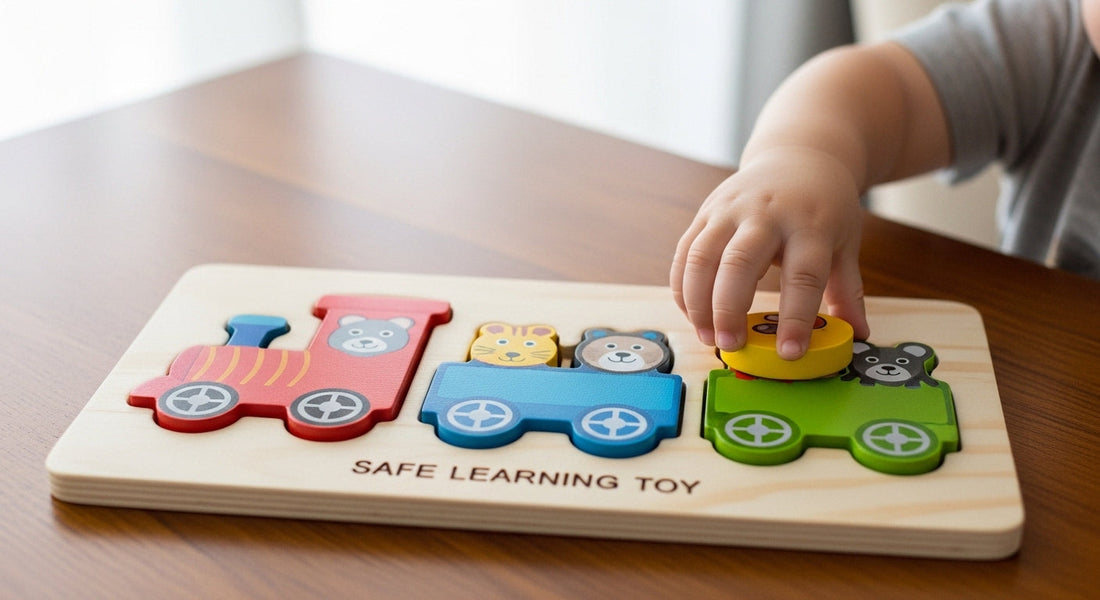
The Importance of Meaningful Play in Toddler Years
The toddler stage is one of the most critical phases of childhood development. Between the ages of one and three, children absorb information rapidly and develop foundational cognitive, physical, and emotional skills that shape their future learning. During this stage, the toys parents choose are not simply entertainment tools. They become instruments of growth, exploration, and discovery.
A wooden puzzle for toddlers represents one of the most timeless and effective learning tools available. While modern toy aisles are filled with flashing lights and electronic sounds, many American families are returning to simple, hands-on toys that encourage independent thinking and real-world interaction. Wooden puzzles remain a trusted choice because they combine durability, safety, and developmental value in a single product.
At ToysBubu, we believe meaningful play builds confident learners. A wooden puzzle is not just a board with shapes. It is an opportunity for toddlers to explore their abilities, challenge their minds, and experience the satisfaction of solving problems on their own.
How Wooden Puzzles Stimulate Brain Development
During toddlerhood, the brain forms connections at an extraordinary pace. Neural pathways strengthen through repeated activity and hands-on experiences. When a child interacts with a wooden puzzle, multiple areas of the brain activate simultaneously.
Visual processing comes into play as toddlers study the shapes, colors, and images on the puzzle board. They compare each piece to its matching slot, learning to distinguish subtle differences in size and contour. This strengthens visual discrimination skills, which later support reading and writing.
Spatial awareness develops as toddlers rotate puzzle pieces and adjust their position to fit correctly. They begin to understand how objects relate to one another in space, which contributes to early mathematical thinking.
Memory skills are reinforced when toddlers remember where a specific piece belongs. Over time, they rely less on trial and error and more on recall, demonstrating cognitive growth.
Developing Fine Motor Strength Through Hands-On Interaction
Fine motor development is essential during early childhood. A wooden puzzle for toddlers encourages small but powerful movements that strengthen finger muscles and improve hand control.
When a child grasps a puzzle piece, lifts it, rotates it, and aligns it carefully with the board, they are practicing coordination. These repeated actions build muscle control necessary for future tasks such as holding a pencil, using scissors, tying shoes, and managing clothing fasteners.
Unlike flat cardboard puzzles, wooden puzzles typically feature thick, easy-to-hold pieces designed specifically for small hands. This thoughtful design allows toddlers to manipulate pieces comfortably, promoting independence and confidence.
Encouraging Logical Thinking and Early Problem-Solving
Problem-solving does not begin in elementary school. It starts in toddlerhood with simple challenges like completing a puzzle. Each wooden puzzle introduces a manageable task that encourages experimentation.
When a piece does not fit immediately, toddlers must pause and reconsider their approach. They learn to rotate the piece, try a different position, or select another option. This process builds logical reasoning skills and patience.
Over time, toddlers begin to anticipate solutions more quickly. Their confidence grows as they recognize patterns and understand how shapes align. These early experiences with structured challenges create a foundation for more complex learning later in life.
Supporting Emotional Growth and Confidence
Emotional development is closely connected to achievement. Completing a wooden puzzle provides toddlers with a clear sense of accomplishment. The simple act of placing the final piece into position creates visible success.
That small victory reinforces self-belief. Toddlers begin to understand that persistence leads to positive outcomes. When they encounter new challenges, they approach them with greater resilience.
Wooden puzzles also promote calm and focused play. The quiet concentration required to solve a puzzle can help regulate emotions and create a sense of stability. In an environment filled with digital distractions, this focused engagement is increasingly valuable.
Expanding Vocabulary and Concept Recognition
Many wooden puzzles introduce toddlers to animals, vehicles, numbers, letters, shapes, or everyday objects. As children interact with these images, parents naturally engage in conversation about what they see.
Naming animals, describing colors, and identifying shapes all contribute to language development. Repetition strengthens vocabulary retention, and visual associations support comprehension.
A wooden puzzle for toddlers becomes more than a matching activity. It becomes a language-building experience that strengthens communication skills through play.

Why Wooden Materials Matter
The material of a toy influences both durability and sensory experience. Wooden puzzles offer advantages that plastic and cardboard alternatives often lack.
Wood provides a sturdy, stable base that withstands repeated handling. It does not bend easily, and high-quality wooden puzzles resist cracking or warping. This durability makes them suitable for daily play in busy households.
The texture of wood also offers a natural sensory element. Toddlers benefit from tactile experiences that involve different materials. The smooth yet solid feel of wood enhances engagement and encourages exploration.
For many American families, wooden toys also align with eco-conscious values. Wood is biodegradable and long-lasting, making it a more sustainable option compared to disposable plastic toys.
A Screen-Free Activity That Encourages Focus
Modern families face constant digital exposure. While technology has its place, many parents intentionally seek screen-free activities that allow children to develop focus and creativity.
A wooden puzzle for toddlers offers a quiet, self-directed experience. There are no flashing lights or automated sounds guiding the process. Instead, toddlers rely on observation, reasoning, and persistence.
This type of engagement strengthens attention span. As toddlers concentrate on completing the puzzle, they practice staying with a task from beginning to end. These focus-building habits support readiness for preschool and structured learning environments.
Ideal for Home, Daycare, and Preschool Settings
Wooden puzzles are versatile and adaptable to various environments. At home, they provide calm playtime during mornings, afternoons, or before bedtime. In daycare or preschool settings, they serve as valuable educational tools that encourage cooperative learning.
When toddlers work on puzzles together, they practice sharing, turn-taking, and communication. They observe how others approach challenges and learn from different strategies.
The sturdy construction of ToysBubu wooden puzzles makes them ideal for repeated use in both private and classroom settings.
Growing with Your Child
One of the strengths of a wooden puzzle for toddlers is its ability to evolve with development. Younger toddlers may begin with simple shape puzzles featuring large pieces. As skills improve, they can transition to more detailed images, alphabet puzzles, or number boards.
This progression keeps the toy relevant over time. Instead of losing interest quickly, children continue discovering new challenges within the same category of play.
Investing in high-quality wooden puzzles means investing in long-term learning opportunities.
A Thoughtful and Educational Gift Option
When selecting gifts for toddlers, many parents and relatives look for items that offer both enjoyment and value. A wooden puzzle makes a meaningful gift because it supports development while remaining engaging.
Whether for a birthday, holiday celebration, or milestone event, a wooden puzzle for toddlers communicates thoughtfulness. It shows consideration for the child’s growth and curiosity.
Unlike novelty toys that lose appeal quickly, a well-crafted wooden puzzle continues to provide benefits over time.

The ToysBubu Commitment to Quality and Safety
At ToysBubu, every wooden puzzle is designed with careful attention to detail. We prioritize child-safe finishes, smooth edges, and sturdy craftsmanship to ensure a secure play experience.
Our puzzles are created to meet the expectations of modern American families who value both safety and educational impact. We understand that parents want products they can trust. That is why durability and thoughtful design are central to every ToysBubu wooden puzzle.
By combining bright, engaging visuals with reliable construction, we create puzzles that inspire curiosity while supporting healthy development.