
TL;DR
- The best toys for toddlers are safe, simple, hands-on, and easy to hold.
- Ages 1–3 need different toys because toddlers grow quickly.
- One-year-olds need soft, chunky, sensory, and supervised play toys.
- Two-year-olds enjoy puzzles, pretend play, stacking, sorting, and movement toys.
- Three-year-olds are ready for memory games, matching games, early reading toys, and simple puzzles.
- Always check age labels, small parts, loose pieces, sharp edges, and material quality.
- Parents can choose educational toys for toddlers that support fine motor skills, language, focus, memory, and creativity.

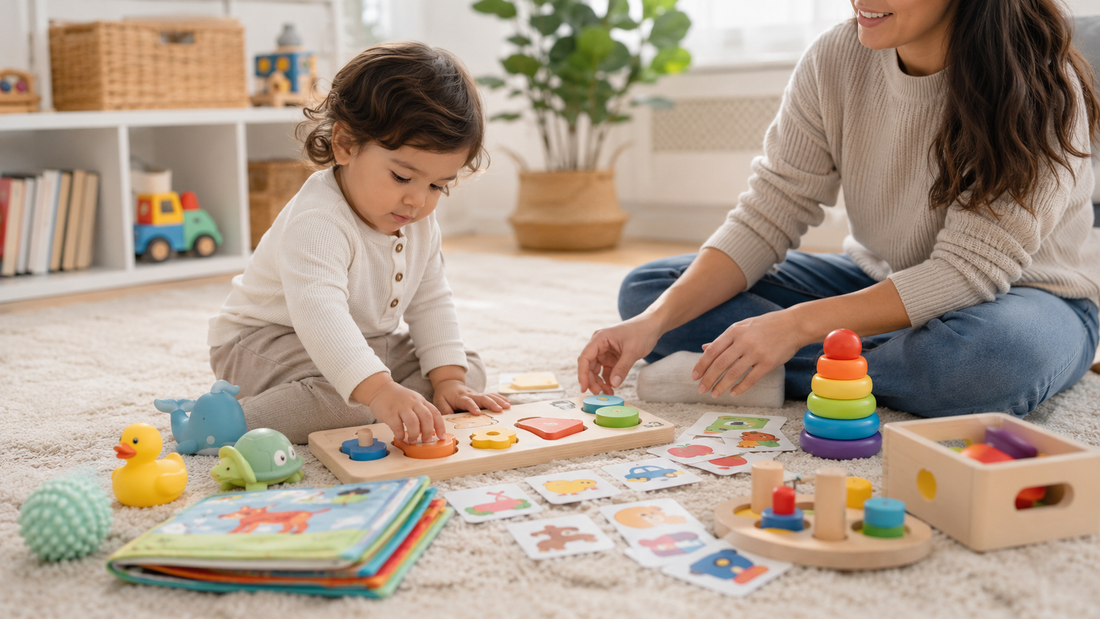
The best toys for toddlers are safe, easy to grip, screen-free, and matched to ages 1–3. Good toddler toys support development through hands-on play, such as sorting, stacking, matching, squeezing, pretending, reading, and problem-solving. Parents should choose toys with large pieces, smooth edges, safe materials, and clear age guidance.
Introduction
Toddlers learn by touching, moving, testing, copying, and repeating. That is why choosing the best toys for toddlers is not just about finding something cute. The right toy can help a child practice hand control, build early words, explore textures, solve simple problems, and play with confidence.
But ages 1–3 can be tricky. A toy that works for a 3-year-old may not be safe for a 1-year-old. A toy that feels exciting for a 1-year-old may feel too simple for a 3-year-old.
This guide helps parents choose safe and educational toys for toddlers by age, skill, and play style. Parents can also explore ToysBubu’s early learning toys for toddlers when they want screen-free play ideas that match everyday learning moments.
What Are the Best Toys for Toddlers?
The best toys for toddlers are toys that match the child’s stage, not just their age. A good toddler toy should invite action. Toddlers should be able to pick it up, move it, sort it, squeeze it, stack it, match it, or use it in pretend play.
Strong toddler toys usually support at least one of these skills:
- Fine motor skills
- Hand-eye coordination
- Language growth
- Memory and focus
- Pretend play
- Early problem-solving
- Sensory exploration
- Gross motor movement
- Confidence and independence
For example, a matching game can support memory and focus. A soft bath toy can support squeezing, grasping, and sensory play. A spelling puzzle can support letter recognition and early reading for older toddlers.
NAEYC notes that good toys should match a child’s development and emerging abilities, and that safe, open-ended items can often be used in more than one way as children grow.
So instead of asking, “What toy is popular?” parents should ask:
- Can my toddler hold this safely?
- Does this toy match their current stage?
- Can they play with it in more than one way?
- Does it support learning without pressure?
- Is it safe for their age?
That is the best way to choose toddler toys that are fun and useful.
What Toys Are Best for 1-Year-Old Toddlers?
One-year-old toddlers are still learning how to use their hands, balance their bodies, and understand cause and effect. Many still put toys in their mouth, so safety matters more than complexity.
The best toys for 1-year-old toddlers are usually:
- Soft
- Large
- Lightweight
- Easy to grip
- Easy to clean
- Simple to understand
- Free from small loose parts
Good toy types for this stage include:
- Soft bath toys
- Chunky board books
- Large stacking toys
- Soft plush toys
- Big blocks
- Simple sensory toys
- Push-and-pull toys
- Large shape toys
Bath and water play can be useful when supervised. Toys like soft bath and water toys can help little hands practice squeezing, grasping, and exploring water movement. ToysBubu’s Itzy Splash Gift Set is described as soft, squeezable, colorful, and designed to support motor skill development through grasping, squeezing, and sensory water play.
For this age, keep play simple. A 1-year-old does not need complex rules. They need safe toys they can touch, move, and explore again and again.
What Toys Are Best for 2-Year-Old Toddlers?
Two-year-olds often want more independence. They may stack, dump, carry, sort, pretend, scribble, and copy adults. This is a great stage for educational toys for toddlers because children are starting to connect actions with ideas.
The best toys for 2-year-old toddlers often include:
- Shape sorters
- Large puzzles
- Stacking toys
- Pretend play sets
- Chunky crayons
- Soft dolls
- Musical toys
- Sensory toys
- Simple matching activities
- Picture books
At this age, parents should look for toys that let toddlers practice:
- Naming colors
- Matching shapes
- Holding large pieces
- Turning pages
- Pretending with real-life routines
- Solving simple problems
- Cleaning up and sorting
A 2-year-old may not follow game rules yet. That is okay. The goal is not perfect play. The goal is practice.
A simple animal toy, puzzle, or matching concept can help toddlers notice patterns. A pretend play set can help them copy routines like cooking, cleaning, feeding a doll, or caring for animals. These moments support language because parents can name objects, actions, and feelings during play.
For this age, choose toys that are not too small, not too advanced, and not too frustrating. The toy should make the child feel capable.
What Toys Are Best for 3-Year-Old Toddlers?
Three-year-olds are often ready for more structured play. They may enjoy simple rules, matching pairs, puzzles, early spelling, pretend stories, and turn-taking games. This is where toddler play starts to move toward preschool learning.
Good toys for 3-year-old toddlers include:
- Memory matching games
- Early spelling puzzles
- Simple board games
- Pretend play sets
- Art and craft kits
- Early reader books
- Chunky jigsaw puzzles
- Sensory fidget toys marked ages 3+
ToysBubu’s forest animal matching game is a strong fit for older toddlers because it is designed for ages 3–6 and supports memory, focus, and visual recognition. The product also highlights chunky, durable cards that are easier for little hands to hold.
The mini memory match game is another older toddler option because it is listed for ages 3+ and uses easy-to-hold pieces for memory and focus play.
For early literacy, spelling matching puzzles can work well for 3-year-olds who are ready for letters, matching, and early word play. ToysBubu’s spelling puzzle set is recommended for ages 3+ and focuses on spelling, letter recognition, early reading, fine motor skills, and hand-eye coordination.
Parents can also introduce early reader learning toys when a toddler starts showing interest in letters, sounds, and storytime.
The key is to keep learning playfully. A 3-year-old does not need academic pressure. They need hands-on toys that make letters, memory, and problem-solving feel fun.
How Do Educational Toys Support Toddler Development?

Educational toddler toys work best when they feel like playing. Toddlers learn through repeated action. They build skills by doing the same thing in new ways. Some older toddlers also enjoy soft sensory toys that keep their hands busy during quiet play, travel, or waiting time. A soft Bao squishy toy, can give children a simple squeeze-and-release activity that supports sensory exploration and screen-free play. Parents should still check the age label and use sensory toys with supervision, especially around younger toddlers or younger siblings.
For example:
|
Toy Type |
Skill It May Support |
|
Matching games |
Memory, focus, and visual recognition |
|
Puzzles |
Problem-solving, patience, hand control |
|
Bath toys |
Grasping, squeezing, sensory play |
|
Pretend play |
Language, imagination, and social skills |
|
Books |
Vocabulary, listening, and early literacy |
|
Art toys |
Fine motor skills, creativity |
|
Fidget toys |
Sensory exploration and busy hands |
This age-based view matters because toddlers grow quickly. A 1-year-old may need soft sensory play. A 2-year-old may enjoy pretend play and simple puzzles. A 3-year-old may be ready for matching games and early literacy toys.
The best learning happens when parents join the play. You can ask simple questions:
- “Where does this piece go?”
- “Can you find the fox?”
- “What color is this?”
- “Can you squeeze the toy?”
- “What happens next in the story?”
These small questions turn play into learning without making it feel like school.
What Safety Features Should Parents Check First?

Safety should come before learning value. Toddlers explore with their hands and mouths, so every toy should be checked before play.
For toddlers under 3, avoid toys with:
- Small detachable parts
- Loose magnets
- Small balls
- Broken plastic
- Sharp edges
- Long strings or ribbons
- Loose buttons or eyes
- Battery compartments that do not close securely
The CPSC warns that toys or games containing small parts for children ages 3–6 must carry warnings not to buy them for children under 3 because of choking risk. The same CPSC small-parts guidance also notes that children’s products must avoid hazardous sharp points, sharp edges, unsafe lead levels, hazardous chemicals, and flammability risks.
Parents should also check:
- Age label
- Material quality
- Washability
- Piece size
- Durability
- Whether the toy breaks easily
- Whether the toy needs supervision
This is especially important for fidget toys, putty, matching games, puzzles, and toys with multiple small pieces. Toys like a fidget pop ball can be fun for sensory play, but ToysBubu lists it as ages 3+, so it fits better for older toddlers and preschoolers than younger toddlers.
A simple rule helps: if the toy has small parts, save it for older toddlers and supervised play.
Which Toys Should Toddlers Be Able to Pick Up and Hold?
Toddlers need toys that match their hands. If a toy is too tiny, too slippery, too heavy, or too hard to control, it may frustrate them.
Good toddler toys are usually:
- Chunky
- Lightweight
- Smooth
- Easy to grip
- Easy to move
- Easy to clean
- Strong enough for repeated play
“Toys toddlers can hold” are especially useful because grip practice supports fine motor development. Fine motor skills help children later with drawing, dressing, feeding, building, and early writing.
Great examples include:
- Chunky puzzle pieces
- Large matching cards
- Soft squeeze bath toys
- Thick board books
- Big crayons
- Large animal figures
- Soft dolls
- Simple stacking pieces
ToysBubu’s Forest Animals Matching Game mentions chunky, durable cards that are easy for little hands to hold, which makes it more practical for preschool-style matching play.
For younger toddlers, choose fewer pieces. For older toddlers, add more pieces slowly.
How ToysBubu Helps Parents Choose Toddler Toys
ToysBubu’s toddler toy strategy works best when parents shop by stage, not by trend. A toddler toy should feel fun first, but it should also support safe, hands-on learning.
For younger toddlers, parents can focus on sensory play, bath toys, soft toys, and large pieces. For 2-year-olds, they can explore early learning toys that support matching, sorting, pretend play, and simple problem-solving. For 3-year-olds, they can add memory games, early reader toys, spelling puzzles, and screen-free learning activities.
Parents can browse ToysBubu’s early learning toys for toddlers when they want age-friendly play ideas that support development without making playtime feel too advanced.
The best approach is simple:
- Start with safety
- Match the toy to the child’s age
- Choose toys that build one clear skill
- Keep playing screen-free when possible
- Let toddlers repeat the activity
- Add harder toys only when the child is ready
That is how toddler toys become more than entertainment. They become part of a child’s daily learning routine.
Frequently Asked Questions
-
What are the best toys for toddlers?
The best toys for toddlers are safe, easy to hold, and matched to ages 1–3. Good options include soft sensory toys, bath toys, stacking toys, puzzles, pretend play sets, matching games, and early reading toys.
-
What toys help toddler development?
Toys that involve sorting, stacking, matching, squeezing, pretending, reading, and problem-solving can support toddler development. These toys may help with fine motor skills, language, focus, memory, creativity, and confidence.
-
Are educational toys good for toddlers?
Yes, educational toys can be helpful when they feel playful and age-friendly. The best educational toys for toddlers encourage hands-on learning without pressure.
-
What toys are safest for 1-year-old toddlers?
Safe toys for 1-year-olds are usually soft, large, lightweight, and free from small loose parts. Parents should choose toys with smooth edges, safe materials, and clear age guidance.
-
Are fidget toys good for toddlers?
Some sensory fidget toys may help older toddlers keep their hands busy, but parents should check the age label first. Many fidget toys are better for ages 3+ and should be used with supervision.
-
What toys are best for 3-year-old toddlers?
Three-year-olds may enjoy matching games, simple puzzles, pretend play, early reader toys, spelling puzzles, art toys, and memory games. These toys can support focus, language, creativity, and problem-solving.
-
How many toys does a toddler need?
Toddlers do not need too many toys. A few strong choices are enough when they support different play styles, such as sensory play, movement, pretend play, puzzles, and reading.
Conclusion
The best toys for toddlers are safe, simple, educational, and easy for small hands to use. Ages 1–3 need toys that support real development through play, not pressure. A 1-year-old may need soft sensory toys. A 2-year-old may enjoy sorting, stacking, and pretend play. A 3-year-old may be ready for matching games, puzzles, and early literacy toys.
Parents can make better choices by checking age labels, avoiding small parts for younger toddlers, and choosing toys that support fine motor skills, language, focus, creativity, and confidence.
ToysBubu’s early learning collection gives parents a helpful place to find toddler-friendly toy ideas for screen-free play, learning, and everyday development.