
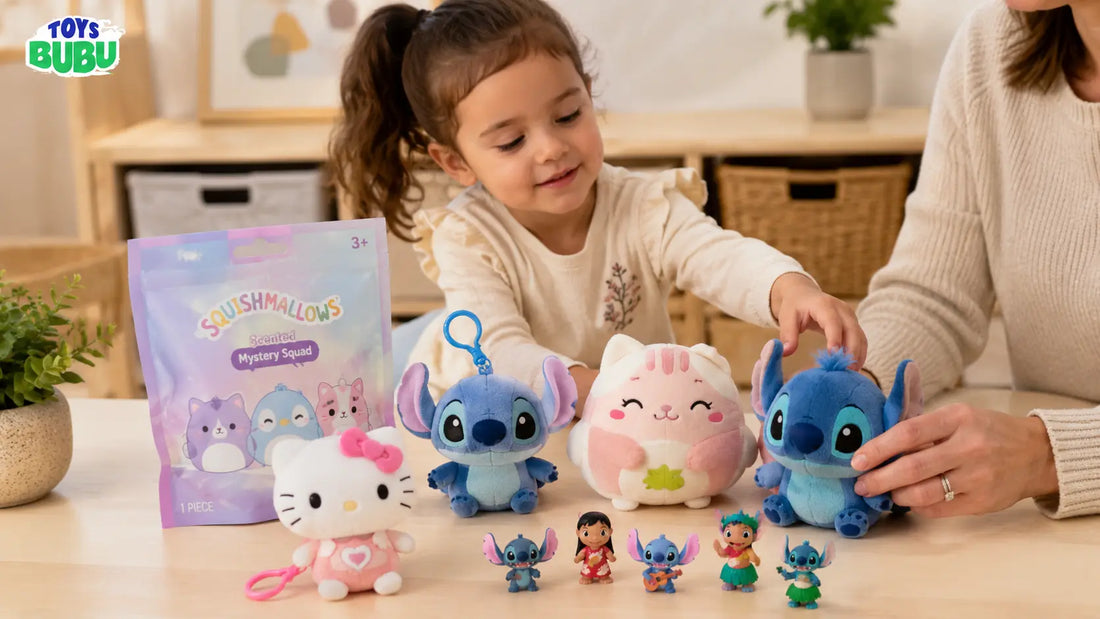
TL;DR
- Fidget toys for kids are small sensory tools that give children something safe and simple to touch, squeeze, hold, or move.
- They may help some kids stay calm, manage restlessness, or focus during quiet tasks.
- The best fidget toy depends on the child’s age, sensory preference, and where they will use it.
- Quiet, simple fidgets are usually better for school than noisy, flashy, or messy toys.
- Parents should check age labels, small parts, seams, smell, materials, and cleaning needs before buying.
- Sensory toys are helpful play tools, but they are not a treatment or replacement for professional support.
- ToysBubu parents can use fidget and sensory toys as part of screen-free play, travel kits, calm-down corners, or gift baskets.
Fidget toys for kids are small sensory toys that give children touch, movement, or pressure input through squeezing, stretching, spinning, holding, or manipulating. They may support calm, focus, and self-regulation for some children, especially when matched to the child’s age, sensory needs, and setting. Parents should choose safe, quiet, easy-to-clean options.
Introduction
Parents hear a lot about fidget toys for kids. Some people call them focus tools. Some call them sensory toys. Some teachers welcome them, while others worry they can become classroom distractions.
The truth is more balanced.
A fidget toy can be helpful when it gives a child a simple, safe way to use their hands while listening, waiting, reading, riding in the car, or calming down. But not every fidget toy works for every child. A noisy spinner, sticky squishy, or tiny collectible may be fun at home, but not right for school or toddlers.
This guide explains what fidget and sensory toys are, how parents can choose them, what safety checks matter, and how to use them in a way that supports play instead of creating more distractions.
What Are Fidget and Sensory Toys for Kids?

Fidget and sensory toys are toys that give children something to touch, squeeze, press, rub, stretch, hold, or move. They are often small enough to fit in a child’s hand and simple enough to use during calm play or short waiting moments.
Common examples include:
- Squishy toys
- Plush keychains
- Pop-style toys
- Stretchy toys
- Textured toys
- Stress-ball style toys
- Soft collectibles
- Small hand-held toys
- Keychain toys
- Mini figures for quite imaginative play
The main idea is sensory input. Some toys feel soft. Some give pressure. Some offer texture. Some have a repeated movement. Some children enjoy the comfort of holding a favorite plush or small character.
That is why sensory toys are not only about “fidgeting.” They can also support:
- Quiet play
- Tactile exploration
- Waiting time
- Travel routines
- Calm-down corners
- Reward boxes
- Gift baskets
- Screen-free play
For parents, the goal is not to buy the trendiest fidget. The goal is to choose a toy that matches the child, the setting, and the reason for use.
Are Fidget Toys Good for Kids?
Fidget toys can be good for kids when they are safe, age-appropriate, and used with a clear purpose. They may help some children manage busy hands, restlessness, boredom, or overstimulation.
They are most useful when a child can use the toy without losing track of the main activity. For example, a child may hold a soft squishy while listening to a story, waiting at a restaurant, or sitting during a long car ride.
Fidget toys may be less helpful when they become the main focus. If a child is watching the toy, showing it to everyone, making noise with it, throwing it, or trading it during class, it is no longer acting like a support tool. It has become an activity.
A helpful parent rule is simple:
A good fidget keeps the hands busy while the mind stays available.
A fidget may be a good fit when it is:
- Quiet
- Safe for the child’s age
- Easy to hold
- Not messy
- Not too visually distracting
- Durable enough for repeated use
- Easy to put away
- Enjoyable without becoming overstimulating
Parents should also be careful with strong claims. Fidget toys do not cure attention problems, anxiety, autism, ADHD, or sensory processing differences. For some children, they may support focus or calm. For other children, they may simply be fun toys. Both uses are okay when parents choose safely.
How Do Fidget Toys Help Kids Focus or Calm Down?
Some children focus better when their hands have something simple to do. This is not unusual. Many adults click a pen, tap a foot, doodle, chew gum, or hold a drink during long tasks. Kids may need a safer and more parent-approved version of that same habit.
Fidget toys may support focus by giving the body a small outlet for movement. Instead of leaving the chair, grabbing other objects, or interrupting, the child has a simple tool in their hand.
They may also support calm by offering repeated sensory input. Squeezing, rubbing, pressing, or holding something soft can feel predictable. Predictable input can be comforting for some children during waiting, transitions, or quiet time.
Fidget toys often work best during:
- Reading time
- Homework breaks
- Waiting rooms
- Car rides
- Airplane travel
- Restaurant waits
- Calm-down routines
- Bedtime wind-down, when safe and supervised
- Long conversations where the child needs to sit nearby
The key is matching the toy to the child’s need.
A child who seeks pressure may like a soft, squishy toy. A child who enjoys texture may like a toy with raised details. A child who likes comfort may prefer a plush keychain or small character toy. A child who gets distracted by motion may need something less flashy than a spinner.
Parents can test one toy at a time and observe:
- Does the child seem calmer?
- Does the toy create more noise?
- Does the child use it safely?
- Does it help while waiting?
- Does it distract from the task?
- Does the child keep asking for a different toy?
This small observation step is what makes the toy choice more helpful and less random.
What Types of Fidget Toys Work Best for Different Kids?
There is no single “best” fidget toy for every child. The best option depends on what the child naturally seeks.
Soft squishy toys for pressure seekers
Some kids like to squeeze, press, or hold something soft. Squishy toys can give gentle hand pressure and may be useful for calm play, car rides, or quiet breaks.
Parents can look at options like the Squishmallow scented mystery bag for a soft surprise-style sensory gift idea.
Best for:
- Kids who like soft textures
- Kids who squeeze objects when waiting
- Calm-down baskets
- Gift bags
- Screen-free rewards
Watch for:
- Strong smell
- Tears or leaks
- Sticky surfaces
- Small parts
- Age label
Plush keychains for comfort and portability
Plush keychains work well for kids who like carrying a familiar character. They are not always “fidget toys” in the classic sense, but they can give comfort, softness, and something small to hold.
Examples include the Sanrio Hello Kitty food truck, the Squishmallow keychain, and the Disney Stitch Squishmallow plush keychain.
Best for:
- Backpack accessories
- Travel comfort
- Kids who like soft collectibles
- Older children who enjoy character toys
- Gift add-ons
Watch for:
- Keychain hardware
- Choking risk for younger children
- School rules
- Loose stitching
Character collectibles for quiet hand play
Collectibles can be useful when a child enjoys small-world play, sorting, displaying, or holding a favorite character. They may not offer the same squeeze input as a squishy toy, but they can support quiet play and interest-based engagement.
For example, children who enjoy surprise toys or character themes may like Lilo & Stitch mystery minis, while older collectors may enjoy character figures like the Kuromi K-Pop Funko Pop.
Best for:
- Older kids
- Collectors
- Display shelves
- Reward systems
- Quite imaginative play
Watch for:
- Small parts
- Age rating
- Fragility
- Whether the toy is for play or display
Seasonal plush toys for gifting and comfort
Seasonal plush toys can work well when parents want a sensory-friendly gift that feels soft, cute, and collectible. A plush like the Squishmallow Valentine Luanne Opossum with a lollipop can fit gift baskets, holiday surprises, or comfort toy routines.
Best for:
- Birthday gifts
- Valentine’s Day baskets
- Holiday gifts
- Cozy reading corners
- Bedtime comfort for age-appropriate children
Watch for:
- Size
- Wash care
- Loose accessories
- Safe sleep guidance for younger children
What Should Parents Check Before Buying Fidget Toys?

Safety matters more than trends. Because fidget toys are often squeezed, pulled, handled, dropped, and carried around, parents should check them carefully before giving them to a child.
Use this simple buying checklist.
1. Check the age recommendation
Age labels matter. A toy that is fine for an older child may not be safe for a toddler. Small pieces, keychain parts, mini figures, and detachable accessories can be choking risks for younger kids.
For toddlers, parents should usually choose larger, simple, easy-to-clean toys with no tiny parts.
2. Avoid strong chemical smells
A strong plastic, paint, glue, or chemical smell is a red flag. Some squishy toys can have scents by design, but the smell should not be harsh or irritating. If a toy smells unusually strong, parents should set it aside and check the packaging or retailer information.
3. Look for tears, leaks, or weak seams
Squishy and soft toys should be checked often. If the toy starts tearing, leaking, shedding, or losing parts, it should be removed from play.
This is especially important for kids who chew, pull, bite, or mouth toys.
4. Think about the setting
A toy that works at home may not work in school. A toy that is perfect for a gift basket may not be right for a classroom desk.
For school, choose fidgets that are:
- Quiet
- Small
- Not sticky
- Not messy
- Not flashy
- Easy to keep in one hand
- Easy to put away
At home, parents can allow more playful options as long as they are safe.
5. Choose trusted stores
Parents should be careful with unknown sellers, very cheap listings, and toys with unclear safety details. Buying from a trusted toy retailer makes it easier to review product details, age guidance, and related options.
Parents can browse ToysBubu’s fidget and sensory toys collection for collectible, squishy, plush, and sensory-friendly gift ideas.
Are Fidget Toys Good for School, Travel, and Quiet Time?
Fidget toys can be useful in school, travel, and quiet time when parents choose the right type and set simple rules.
Fidget toys for school
For school, less is usually better. The best school fidgets are quiet and simple. They should not roll across the room, make sound, light up, spill, or attract too much attention.
Parents can teach children these rules:
- Use it in one hand.
- Keep it quiet.
- Keep it near your body.
- Do not trade it during class.
- Do not throw it.
- Put it away when the teacher asks.
- Use it to help with listening, not to start a game.
Some schools have their own rules for sensory tools. Parents should check with the teacher, especially if the child uses fidgets for focus, sensory regulation, ADHD support, autism support, or an individual learning plan.
Fidget toys for travel
Travel is one of the easiest places to use fidget toys. Waiting at the airport, sitting in the car, or staying patient at a restaurant can be hard for kids. A small sensory toy can give them something to do without a screen.
Good travel fidgets are:
- Portable
- Easy to clean
- Lightweight
- Not messy
- Not loud
- Easy to replace if lost
Plush keychains, small squishy toys, and mini character toys can work well for travel kits.
Fidget toys for quiet time
At home, sensory toys can be part of a calm-down basket or quiet play shelf. Parents can keep the routine simple.
A quiet-time basket might include:
- A soft plush
- A squishy toy
- A small puzzle
- A coloring book
- A storybook
- A favorite small character
- A cozy blanket
This helps children learn that quiet play does not have to mean boredom. It can still feel comforting, hands-on, and fun.
How Can Parents Choose Fidget Toys by Age?
Age is one of the most important parts of choosing fidget toys for kids. A toy that works for a 7-year-old may not be safe for a 2-year-old.
Toddlers ages 1–3
Toddlers need large, simple, durable toys. Avoid small parts, detachable pieces, hard mini figures, magnets, button batteries, and anything that can break into choking hazards.
Better choices include:
- Large soft toys
- Simple sensory balls
- Chunky textures
- Easy-grip toys
- Washable items
For toddler-focused ideas, parents can read ToysBubu’s guide to the best toys for 4-year-olds once their child moves into preschool play needs.
Preschoolers ages 4–5
Preschoolers often enjoy pretend play, character toys, soft plush, and simple sensory tools. They may also start using fidgets during story time, car rides, or quiet play.
Good options may include:
- Soft squishy toys
- Plush keychains with supervision
- Character toys
- Simple pop-style toys
- Calm-down basket toys
- Art and sticker activities paired with sensory breaks
Parents choosing toys for this stage can also explore the best toys for 5-year-olds for more age-friendly learning and play ideas.
Kids ages 6+
Older kids may be ready for more collectible-style toys, display figures, mystery minis, and small sensory tools. This is also the age when school rules become more important.
Good options may include:
- Quiet hand fidgets
- Plush keychains
- Character collectibles
- Mini figures
- Squishy toys
- Display collectibles
- Reward-box toys
For children around early elementary age, ToysBubu’s best toys for 6-year-olds guide can help parents match toys with growing focus, creativity, and independence.
Where Do Collectible Sensory Toys Fit Into Play?
Collectibles and sensory toys often overlap. A child may love a toy because it feels soft, but also because it features a favorite character. That emotional connection matters.
For some kids, a small plush or character collectible becomes a comfort item. For others, it becomes part of a collection, pretend play setup, backpack decoration, or reward system.
Examples of collectible-style options include:
- Ichigo Kurosaki Dangai Funko Pop
- Care Bears Share Bear Bunny Funko Pop
- Lilo & Stitch mystery minis
- Disney Stitch Squishmallow plush keychain
Parents should separate “play toys” from “display toys.” Some collectibles are better for older children who understand gentle handling. Others are soft and portable enough for everyday comfort.
A simple parent tip is to ask:
Will my child squeeze it, carry it, display it, trade it, or sleep near it?
The answer helps parents choose the safest and most useful option.
How ToysBubu Helps Parents Choose Better Sensory Toy Ideas
ToysBubu helps parents think beyond “what toy is trending?” and focus on how a toy fits into real family life.
A good fidget or sensory toy should make sense for the child’s age, routine, and play style. Some kids need something soft for car rides. Some need a quiet hand toy for waiting rooms. Some enjoy plush keychains as comfort items. Others love collectibles because they connect with a favorite character.
Parents can use ToysBubu as a simple way to compare sensory-friendly gifts, collectibles, plush toys, surprise toys, and value options without turning the process into guesswork.
For gift planning, parents can also explore ToysBubu’s happy deals and value bundle collection when building birthday baskets, reward boxes, sibling gifts, or screen-free activity bundles.
The best toy is not always the biggest or most expensive one. Often, it is the toy that fits the child’s hands, mood, routine, and imagination.
Frequently Asked Questions
-
What are fidget toys for kids?
Fidget toys for kids are small toys or tools that children can hold, squeeze, press, rub, stretch, or move with their hands. They may give sensory input that helps some children stay calm, busy, or focused during quiet tasks.
-
Are fidget toys good for kids?
Fidget toys can be good for kids when they are safe, age-appropriate, and used in the right setting. They may support focus or calm for some children, but they can also become distracting if they are noisy, flashy, or used like a game.
-
Do fidget toys help kids focus?
Fidget toys may help some kids focus by giving their hands a simple job while they listen, read, wait, or sit quietly. They work best when the toy is quiet and does not pull the child’s full attention away from the task.
-
What are the best fidget toys for school?
The best fidget toys for school are quiet, small, clean, and easy to use in one hand. Avoid noisy, messy, or bright, flashing toys, or toys that children want to trade or throw during class.
-
Are sensory toys only for kids with ADHD or autism?
No. Many children can use sensory toys. Some kids with ADHD, autism, or sensory-seeking behaviors may find them helpful, but many children also enjoy them for comfort, play, travel, or quiet time.
-
Are squishy toys safe for kids?
Squishy toys can be safe when they are age-appropriate, well-made, and used as intended. Parents should check for strong odors, tears, leaks, loose parts, and choking hazards, especially for younger children or those who mouth toys.
-
At what age can kids use fidget toys?
It depends on the toy. Toddlers need larger toys with no small parts. Preschoolers can use simple sensory toys with supervision. Older kids may enjoy plush keychains, squishy toys, and collectibles, as long as they match the age label and school rules.
Conclusion
Fidget toys for kids can be helpful, fun, and comforting when parents choose them with care. The best options are safe, age-friendly, quiet when needed, and matched to the child’s sensory style.
Instead of buying every trending toy, parents can look at how their child actually plays. Do they squeeze? Hold? Collect? Carry? Sort? Display? Need comfort during travel? Need help waiting calmly?
That answer will guide the best choice.
ToysBubu offers parent-friendly fidget, sensory, plush, collectible, and value toy ideas for families who want screen-free gifts that feel fun, useful, and easy to fit into everyday routines.