
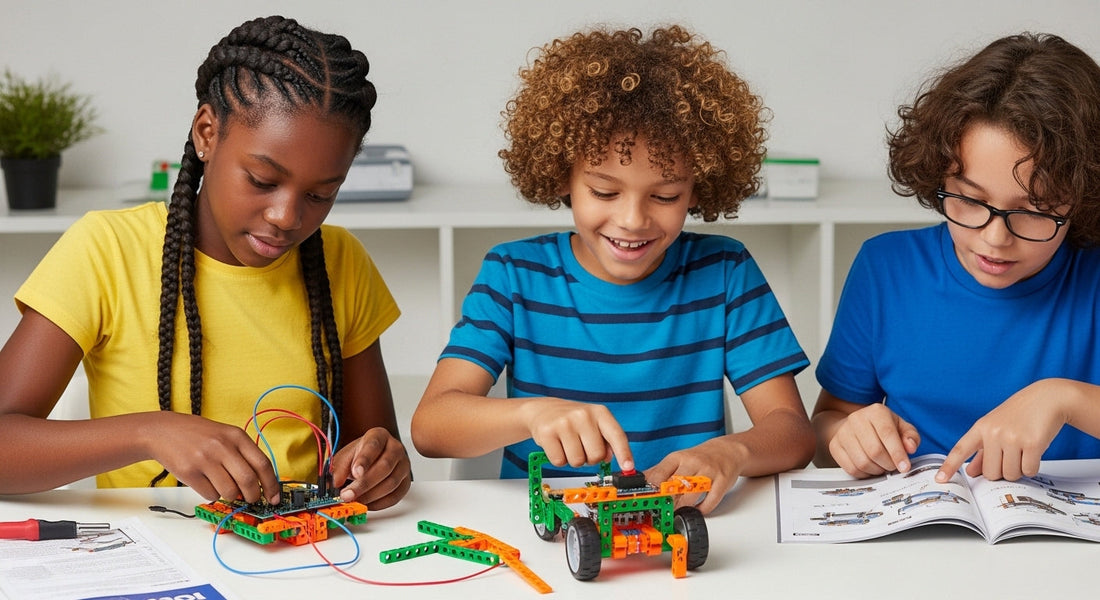
Best Robotics Kits for Kids in the USA: Inspire Young Innovators
Robotics has emerged as one of the most exciting and rapidly growing areas of technology, and there is no better way to introduce children to it than with the best robotics kits for kids. These kits are more than toys—they serve as gateways to STEM learning, creativity, and future-ready skills. In the United States, parents and educators alike recognize the importance of hands-on STEM activities, and robotics kits have become an essential tool to engage young minds.
Robotics kits allow children to explore engineering, programming, and problem-solving in a fun, interactive way. From building simple machines to programming robots to perform tasks, these kits provide a full learning experience that encourages curiosity and innovation. Choosing the right kit can feel overwhelming, given the wide variety of options available, but understanding their benefits and features can make the process easier.
Why Robotics Kits Are Important for Kids
Robotics kits do more than entertain; they act as interactive learning tools that introduce fundamental concepts in science, technology, engineering, and math. They transform abstract ideas into tangible experiences, allowing children to see principles in action.
Engaging with robotics helps kids understand how machines work, develop problem-solving skills, and practice logical thinking. These kits also foster creativity by encouraging experimentation and the design of custom solutions to challenges. For children in the USA, robotics is increasingly seen as an essential early step toward STEM proficiency and future innovation.
How Robotics Kits Build Foundational Skills
Developing Logical Thinking and Problem-Solving
One of the most significant benefits of robotics kits is their ability to nurture logical thinking and problem-solving skills. Children must analyze how parts fit together, figure out the sequence of assembly, and adjust designs when things don’t work as expected. This iterative process mirrors real-world engineering challenges, encouraging resilience and persistence.
When children program their robots to follow certain instructions, they engage in trial-and-error learning that sharpens their analytical abilities. The satisfaction of debugging a robot and achieving the desired outcome reinforces critical thinking and teaches them that mistakes are a natural part of the learning process.
Boosting STEM Learning Through Hands-On Discovery
Robotics kits provide an immersive STEM experience. Children interact with motors, sensors, gears, and circuits, seeing firsthand how each component functions. This hands-on approach makes concepts in physics, engineering, and programming tangible, helping children grasp complex principles with ease.
Instead of learning theory in a textbook, kids actively experiment and see results. This encourages curiosity and retention while building a foundation for advanced STEM studies. Robotics kits allow children to explore coding logic, mechanics, and electronics in an engaging, approachable way.
Encouraging Creativity and Innovation
Robotics kits also foster creativity. Children are encouraged to design new solutions, modify existing models, and explore possibilities beyond the instructions. This creative freedom promotes innovative thinking and empowers kids to express themselves while learning technical skills.
By experimenting with different configurations and programming challenges, children learn that there is often more than one way to achieve a goal. These experiences build confidence and a mindset that embraces exploration, imagination, and creative problem-solving.

Choosing the Right Robotics Kit for Your Child
Selecting the best robotics kit requires careful consideration of several factors to ensure the kit matches your child’s age, interests, and skill level.
Age and Skill Appropriateness
Robotics kits are tailored for different age groups. Younger children benefit from kits that emphasize construction and basic mechanics, using large, easy-to-handle pieces with simple assembly steps. Older children or those with prior experience may enjoy programmable kits that introduce coding, sensor integration, and advanced challenges.
Selecting an age-appropriate kit ensures children remain engaged without feeling overwhelmed and provides a progressive learning experience as their skills develop.
Ease of Use and Instruction Quality
Clear instructions are essential. Kits with step-by-step guides, illustrations, and interactive tutorials help children understand concepts and feel confident completing tasks. Kits that are overly complex or lack guidance can lead to frustration and disengagement.
Ease of programming is also important. Beginner-friendly drag-and-drop interfaces work well for younger kids, while more advanced kits may use text-based coding platforms suitable for older learners.
Hands-On vs. Screen Time Balance
While coding and digital interfaces are integral to robotics, hands-on construction remains crucial. The best robotics kits offer a balanced experience, allowing children to manipulate parts, test designs, and directly observe how their commands affect robot behavior. This combination reinforces both tactile and logical learning.
Replayability and Expansion Potential
A high-quality robotics kit should engage children long after the initial build. Kits that allow multiple configurations, expansions, or programmable challenges provide continued learning opportunities. Replayable kits encourage iterative experimentation, foster creativity, and help children deepen their understanding over time.
Top Types of Robotics Kits for Kids
Robotics kits vary widely, each catering to different learning objectives and interests. Understanding the main categories helps parents make informed choices.
Build-Your-Own Robotics Kits
These kits emphasize construction and mechanical understanding. Children assemble parts such as gears, wheels, and levers, learning basic engineering principles. Build-your-own kits are excellent for introducing young learners to mechanical design without requiring prior coding knowledge.
Programmable Robotics Kits
Programmable kits integrate coding and robotics. Children write instructions to control robot actions, often using beginner-friendly programming environments. These kits teach logical sequencing, computational thinking, and basic coding concepts while engaging students in hands-on construction.
Sensor-Based Robotics Kits
Sensor kits allow robots to interact with their environment. Robots can detect light, motion, or obstacles and respond based on programmed instructions. These kits teach children about automation, feedback systems, and real-world applications of robotics.
Challenge and Competition Kits
Some kits are designed around specific tasks or competitions, such as navigating mazes or completing timed challenges. These kits encourage problem-solving, creativity, and teamwork. They are particularly effective in classrooms, STEM clubs, or collaborative learning environments.
Integrating Robotics into Everyday Learning
Robotics can be seamlessly integrated into daily learning routines. Children can explore mini-projects at home, apply coding logic to personal challenges, or connect their robots to real-world scenarios. For example, they might program a robot to follow a path in the living room or simulate tasks inspired by everyday machines.
Making robotics a regular part of play and learning enhances retention and deepens understanding. Children begin to see technology as a tool for creativity and problem-solving rather than just a pastime.
Benefits Beyond STEM
Engaging with robotics fosters more than technical skills. It helps children develop resilience, collaboration, and communication abilities. Working on group projects teaches teamwork and negotiation, while individual experimentation enhances self-confidence and independent thinking. The combination of STEM skills, creative problem-solving, and social learning makes robotics a holistic educational tool.
Success Stories: Robotics in Action
Across the USA, families and educators report remarkable outcomes from robotics engagement. Children who were hesitant about science develop enthusiasm and confidence, while classrooms integrating robotics see improved participation, collaboration, and problem-solving skills. Robotics kits have become a proven method to spark curiosity, encourage experimentation, and inspire future innovators.

Tips for Parents to Maximize the Robotics Experience
Parents play a pivotal role in enhancing the learning potential of robotics kits. Encourage exploration, ask guiding questions, and celebrate accomplishments to boost confidence and engagement. Creating themed challenges, tracking progress, and integrating learning into everyday situations can make robotics both educational and enjoyable.
By supporting curiosity and allowing children to experiment, parents help cultivate lifelong skills including persistence, critical thinking, and creativity.
Conclusion: Empower Young Minds with Robotics
The best robotics kits for kids in the USA combine fun, education, and hands-on STEM learning. They nurture problem-solving, creativity, and technical skills while preparing children for a future where innovation and critical thinking are key.
By choosing a kit appropriate for age and skill, balancing hands-on play with programming, and encouraging experimentation, parents can provide an enriching experience that inspires curiosity and lifelong learning. Robotics is not just a hobby—it’s a doorway to discovery, confidence, and future-ready skills.
The right robotics kit can ignite a child’s passion for technology, engineering, and problem-solving, helping them become confident, creative, and capable innovators in a rapidly evolving world.