
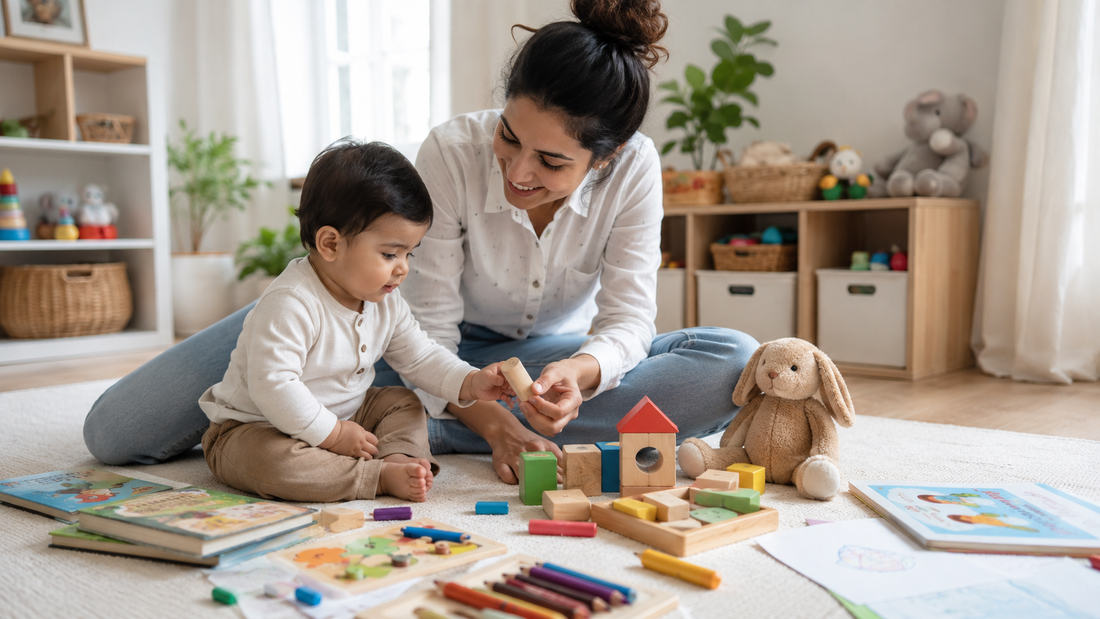
TL;DR
- The best toys for kids by age match a child’s safety needs, skills, and interests.
- 1-year-olds need simple toys for movement, grasping, stacking, and sensory play.
- 2-year-olds enjoy pretend play, sorting, matching, push toys, and early learning toys.
- 3-year-olds often like puzzles, art, blocks, simple games, and role play.
- 4–6-year-olds are ready for craft kits, activity sets, early reading toys, and more creative play.
- Parents should always check age labels, small parts, batteries, magnets, and choking risks.
- ToysBubu helps parents explore age-friendly early learning, fidget, art, activity, and playset ideas.
The best toys for kids by age are toys that match a child’s stage of growth, safety needs, and everyday interests. For ages 1–6, parents should look for toys that support movement, language, fine motor skills, creativity, problem-solving, and pretend play without creating choking or small-parts risks.
Introduction
Choosing toys sounds simple until you stand in front of too many options.
Some toys look fun, but are too advanced. Some are cute but not safe for younger children. Some say “educational” but do not really match the child’s age or play style.
That is why this guide to toys for kids by age is helpful for parents, grandparents, and gift buyers. It breaks down what children usually enjoy from ages 1–6, what skills each age is building, and what types of toys make the most sense.
Child development is not the same for every child. The CDC explains that children reach milestones in how they play, learn, speak, act, and move, and each child grows at their own pace. Use this guide as a simple starting point, not a strict rulebook.
Toy Guide by Stage: Young Infants, Toddlers, Preschoolers, and Kindergarteners

Children do not all grow at the same speed, but age stages can help parents choose better toys.
Young infants need soft, simple, and safe toys that support seeing, reaching, touching, and listening. Since this ToysBubu guide focuses mainly on ages 1–6, parents with younger babies should be extra careful with age labels and avoid anything with small parts.
Toddlers need toys that support movement, curiosity, and simple problem-solving. Good choices include stacking toys, large blocks, board books, sensory toys, push toys, and early learning toys.
Preschoolers are ready for more imagination and creativity. They often enjoy pretend play, dolls, playsets, puzzles, art supplies, beginner games, and hands-on craft kits.
Kindergarteners can usually handle more detailed toys. They may enjoy educational toys for kids such as STEM kits, reading games, craft projects, puzzles, activity sets, and beginner board games.
This stage-based approach helps parents avoid two common mistakes: buying toys that are too babyish or choosing toys that are too advanced. The best toy is one that gives the child a small challenge while still keeping play fun.
Safety and Children’s Toys: What Parents Should Check First

Safety should always come before style, trends, or price when choosing children’s toys. A toy may look fun online, but parents still need to check if it fits the child’s age, habits, and stage of growth.
This is especially important for young infants, toddlers, and preschoolers because younger children often explore toys with their hands and mouths. Small pieces, loose parts, button batteries, sharp edges, strong magnets, and breakable plastic can create safety risks.
Before buying any toy, parents should check:
- The recommended age label
- Small parts or choking risks
- Battery compartments
- Loose magnets
- Sharp corners or rough edges
- Strong smells or poor-quality materials
- Whether adult supervision is needed
- If the toy matches the child’s current skills
For toddlers, toys should be large, sturdy, and simple to use. For preschoolers, parents can choose more creative toys, but they should still check for small accessories. For kindergarteners, toys can include more detailed pieces, puzzles, art materials, and activity sets, but safety labels still matter.
A safe toy should help the child play with confidence. It should not feel too advanced, too fragile, or too risky for their age. When parents choose age-appropriate toys, children can enjoy play while building movement, creativity, focus, and early learning skills.
How Educational Toys for Kids Support Early Learning

Educational toys for kids do not need to feel like schoolwork. The best ones help children learn through simple, hands-on play.
Early learning toys can support basic skills like matching, counting, sorting, stacking, recognizing colors, building words, and solving small problems. These skills matter because children learn best when they can touch, move, repeat, and explore.
For toddlers, educational toys may include shape sorters, stacking toys, board books, sensory toys, and simple puzzles. These toys can support hand control, attention, and early problem-solving.
For preschoolers, good learning toys may include pretend play sets, art materials, matching games, beginner puzzles, and early reading toys. These toys help children build language, imagination, memory, and social skills.
For kindergarteners, educational toys can become more detailed. They may enjoy STEM activity sets, beginner board games, craft kits, reading games, and building toys. These toys can support focus, patience, creativity, and school readiness.
Good educational toys often help children:
- Learn new words
- Practice fine motor skills
- Build focus
- Improve memory
- Explore colors, shapes, and numbers
- Create stories
- Solve simple problems
- Play independently
- Share and take turns
Parents can explore ToysBubu’s early learning toys, art and craft kits for kids, fidget toys for kids, and activity sets to find options that make learning feel natural and fun.
What Are the Best Toys for Kids by Age?
The best toys for kids by age are toys that fit three things: the child’s safety level, current skills, and natural curiosity.
A toy should not just keep a child busy. It should help them explore, move, think, build, imagine, or create. NAEYC’s age-and-stage toy guidance also shows that good toys change as children grow, from simple grasping toys for infants to pretend play, building, and creative materials for older children.
Good age-based toys often support:
- Movement: crawling, walking, jumping, balancing, reaching
- Fine motor skills: stacking, sorting, turning pages, holding crayons
- Language: books, sound toys, storytelling, pretend play
- Thinking: matching, puzzles, cause-and-effect toys
- Creativity: art kits, blocks, dress-up, craft sets
- Social play: dolls, playsets, simple games, role play
A helpful rule is simple: choose toys your child can use with a little challenge, but not so much challenge that play becomes frustrating.
What Are Best Toys for 1 Year Old?
The best toys for 1 year olds are simple, safe, and easy to explore with hands, eyes, and movement.
At this age, many children are learning to stand, walk, point, stack, grab, drop, and copy simple actions. They often enjoy toys that respond to touch, sound, color, and movement.
Good toy ideas for 1 year olds include:
- Stacking cups or soft blocks
- Large shape sorters
- Push-and-pull toys
- Soft balls
- Board books
- Simple musical toys
- Large-piece sensory toys
- Cause-and-effect toys
- Soft dolls or plush toys
Parents should focus on toys with large parts, smooth edges, and simple actions. Avoid toys with small pieces, loose batteries, tiny magnets, or breakable parts.
For this age, parents can explore ToysBubu’s early learning toys collection for simple learning, reading, and sensory-friendly toy ideas.
What Are Best Toys for 2 Year Old?
The best toys for 2 year olds support movement, pretend play, early language, and simple problem-solving.
Two-year-olds are often more active and more expressive. They may enjoy copying adults, naming objects, matching colors, building towers, and playing simple pretend games.
Good toy ideas for 2-year-olds include:
- Shape sorters
- Large blocks
- Pretend food or play kitchen toys
- Simple puzzles
- Toy animals
- Push cars or trucks
- Large crayons
- Matching games
- Interactive board books
- Sensory fidget toys with safe, large parts
At this age, toys should still be simple. A toy with too many steps may overwhelm the child. A good toy gives them one clear thing to do, such as stack, sort, match, push, pull, or pretend.
Parents can use ToysBubu’s fidget toys for kids and early learning categories to find hands-on toys that support calm play, focus, and simple exploration.
What Are the Best Toys for 3 Year Olds?
The best toys for 3 year olds encourage imagination, speech, building, sorting, and creative play.
Three-year-olds often enjoy acting out real-life scenes. They may pretend to cook, care for dolls, build houses, make animal sounds, draw pictures, or play with simple characters. This is a great age for toys that allow storytelling.
Good toy ideas for 3-year-olds include:
- Beginner puzzles
- Playsets
- Dolls and accessories
- Toy vehicles
- Animal figures
- Building blocks
- Art supplies
- Sticker books
- Magnetic drawing boards
- Simple matching games
This is also a strong age for social play. Children may start playing beside other kids and sometimes with other kids. Toys that support sharing, turn-taking, and pretend scenes can be useful.
Parents can explore ToysBubu’s dolls and playsets collection for pretend play ideas that help children build language, imagination, and social understanding.
What Are Best Toys for 4 Year Old?

The best toys for 4 year olds support creativity, early learning, pretend play, and hands-on problem-solving.
Four-year-olds often ask more questions. They enjoy making things, copying adults, learning letters, counting, building bigger structures, and creating pretend worlds. They may also have stronger opinions about favorite characters, colors, animals, and themes.
Good toy ideas for 4-year-olds include:
- Art and craft kits
- Beginner STEM toys
- Memory games
- Puzzles
- Dress-up toys
- Pretend play sets
- Building sets
- Activity books
- Early phonics toys
- Simple board games
This is a good age to introduce toys with more steps, as long as the child can still enjoy the process. For example, a craft kit should have clear pieces, safe materials, and a finished result that the child can feel proud of.
ToysBubu’s art and craft kits for kids collection is a natural fit for this age because it gives children hands-on ways to paint, decorate, build, and create.
What Toys Are Best for 5-Year-Olds?
The best toys for 5-year-olds support early school skills, creativity, focus, and independent play.
At age 5, many children are getting ready for kindergarten or already starting school routines. They may enjoy toys that help with letters, numbers, patterns, storytelling, memory, and coordination.
Good toy ideas for 5-year-olds include:
- Early reader books
- Letter and phonics games
- Number games
- Craft kits
- Building toys
- Science activity sets
- Puzzles
- Simple board games
- Pretend school or role-play toys
- Fine motor skill activities
Five-year-olds often enjoy toys that make them feel capable. They like finishing a puzzle, completing a craft, or telling a story with characters.
Parents can explore ToysBubu’s activity sets for kids and early reader options to support learning without making play feel like homework.
What Are Best Toys for 6 Year Old?
The best toys for 6 year olds are toys that challenge thinking, creativity, reading, building, and problem-solving.
Six-year-olds often want more independence. They may enjoy toys with rules, goals, projects, stories, or collectible elements. They can usually handle more detailed activities than toddlers, but toys should still be easy enough to enjoy without constant adult help.
Good toy ideas for 6 year olds include:
- STEM kits
- Craft kits
- Reading games
- Memory games
- Building sets
- Puzzles
- Collectible toys
- Role-play sets
- Art supplies
- Board games for beginners
This is also a good age for toys that support patience. A child may spend more time building, drawing, reading, or completing a multi-step activity.
For this age group, ToysBubu’s activity, art, collectible, and playset collections can help parents find toys that feel fun but still support learning and creativity.
How Can Parents Choose Safe Toys by Age?
Parents should choose toys by checking the age label, small parts, battery safety, magnet safety, material quality, and how the toy will be used.
The American Academy of Pediatrics advises parents to read warning labels, choose toys larger than a child’s mouth, and be careful with toys that include small batteries or high-powered magnets. The CPSC also explains that products for children under 3 can be banned if they present choking, aspiration, or ingestion hazards because of small parts.
Before buying, check:l toys for kids
- Is the toy marked for the child’s age?
- Are there small pieces?
- Can anything break off?
- Are there button batteries?
- Are there loose magnets?
- Are the edges sharp?
- Is adult supervision needed?
- Does the toy match the child’s ability?
- Is the toy too loud, too complex, or too frustrating?
A safe toy should match both age and behavior. Some children still put objects in their mouths after age 3, so parents should consider the child’s habits, not only the number on the box.
Which Toys Support Learning, Creativity, and Focus?
Toys that support learning, creativity, and focus are usually open-ended. This means the child can use the toy in more than one way.
Examples include blocks, art supplies, pretend play sets, sensory toys, puzzles, books, and activity kits. These toys can grow with the child because they allow new ways to play as the child gets older.
Good learning toys often help children:
- Match colors and shapes
- Practice hand control
- Build patience
- Learn new words
- Tell stories
- Solve simple problems
- Create their own ideas
- Play with others
- Follow simple steps
Parents do not need every toy to be “educational.” A toy can support learning through simple play. A doll can support language. A truck can support movement and storytelling. A puzzle can support patience. A craft kit can support fine motor skills and creativity.
The best choice is often a balanced mix of active toys, quiet toys, creative toys, and pretend play toys.
How ToysBubu Helps Parents Choose Better Toys
ToysBubu helps parents find toys that fit real play routines, not just product labels.
Parents can browse by age and play style, including early learning, fidgets, activity sets, art and craft toys, collectibles, and dolls and playsets. This makes it easier to move from “What should I buy?” to “Which toy fits my child right now?”
For example:
- Parents of younger toddlers can start with early learning toys.
- Parents of active preschoolers can explore fidgets and simple activity toys.
- Parents of creative kids can choose art and craft kits.
- Parents buying gifts can look at playsets, activity sets, and collectibles.
- Parents of early readers can explore books and literacy-focused toys.
The goal is not to buy more toys. The goal is to choose better toys that match a child’s age, interests, and stage of growth.
Frequently Asked Questions
-
What are the best toys for kids by age?
The best toys for kids by age are toys that match the child’s safety needs, skills, and interests. Younger kids need large, simple toys for movement and sensory play. Older kids can enjoy puzzles, art kits, activity sets, early reading toys, and pretend play.
-
What toys are best for a 1-year-old?
Good toys for a 1-year-old include stacking cups, soft blocks, board books, push toys, large balls, and simple cause-and-effect toys. Choose toys with large parts and avoid small pieces, batteries, or magnets.
-
What toys are best for toddlers?
Toddlers often enjoy toys that let them stack, sort, push, pull, match, pretend, and explore. Good choices include blocks, shape sorters, sensory toys, pretend play sets, and simple puzzles.
-
Are educational toys worth it for kids?
Educational toys can be worth it when they match the child’s age and are still fun to use. The best learning toys support skills like language, movement, creativity, memory, and problem-solving through play.
-
How do I choose safe toys for my child?
Check the age label, small parts, batteries, magnets, sharp edges, and warning signs. Also, think about your child’s habits. If your child still puts toys in their mouth, avoid small pieces even if the toy says age 3+.
-
What toys help 4 to 6 year olds learn?
Good toys for 4 to 6 year olds include craft kits, activity sets, beginner STEM toys, puzzles, board games, early reader books, and pretend play toys. These toys can support focus, creativity, reading, counting, and problem-solving.
-
How many toys does a child really need?
Children do not need too many toys. A smaller mix of useful toys is often better than a room full of random items. Try to include toys for movement, creativity, pretend play, quiet focus, and learning.
Conclusion
Choosing toys for kids by age helps parents find toys that are safe, useful, and fun for each stage of childhood.
Young infants, toddlers, preschoolers, and kindergarteners all need different types of play. Younger children often need simple toys that support movement, touch, sound, and early learning. Older children may enjoy educational toys for kids, art and craft kits for kids, fidget toys for kids, puzzles, activity sets, and pretend play toys that support creativity, focus, and problem-solving.
The goal is not to buy more toys. The goal is to choose better toys that match your child’s age, interests, and stage of growth.
Parents can explore ToysBubu’s early learning toys, creative play collections, and the Happy Deal collection for value-friendly toy bundles that make gift buying easier for growing kids.