
TL;DR
- Fidget toys may help some kids focus, but they do not work for every child.
- They work best when they give the hands quiet movement while the child keeps doing the main task.
- For ADHD-style restlessness, a simple fidget may reduce tapping, squirming, or grabbing other objects.
- The best fidgets for focus are quiet, soft, low-effort, and not visually exciting.
- Fidgets become distractions when kids stare at them, throw them, share them, click them, or play with them instead of working.
- Parents should treat fidgets as tools, not toys.
-
A fidget is helpful only if the child stays more engaged with homework, reading, listening, or waiting.

Do fidget toys help kids focus? They may help some kids when the fidget gives quiet hand movement without pulling attention away from the task. For children with ADHD-style restlessness or sensory needs, a simple fidget can support focus by giving the body a small outlet for movement. But noisy, flashy, or highly playful fidgets can become distractions.
Introduction
Many kids move while they think. They tap pencils, wiggle in chairs, twist sleeves, squeeze objects, or grab anything nearby during homework. For some children, especially kids with ADHD-style restlessness, sitting completely still can make focus harder.
That is why parents often ask: Do fidget toys help kids focus?
The honest answer is: sometimes. A fidget toy is not a magic fix for attention. It does not teach focus by itself. But the right kind of fidget may help some children stay with a task by giving their hands something quiet and simple to do.
ToysBubu’s guide on fidget toys for kids and sensory play explains how sensory toys can fit into calm, screen-free routines. This guide goes deeper into the focus question: why fidgets may help, how to use them, and when they should be put away.
Why Do Fidget Toys Help Some Kids Focus?
Fidget toys may help some kids focus because they give the body a small amount of movement while the brain stays with the main task.
Some children think, listen, or read better when their hands are busy. The movement does not need to be big. It may be a soft squeeze, a gentle rub, a small twist, or a quiet pull. This can give the child a safe outlet for restlessness.
For ADHD-style fidget use, the goal is not to stop all movement. The goal is to guide movement, so it becomes quieter, safer, and less distracting.
A child who does not have a fidget may look for movement in other ways, such as:
- tapping the table
- rocking the chair
- chewing sleeves
- clicking pens
- grabbing school supplies
- leaving the seat often
- interrupting the task to find something to touch
A simple fidget can sometimes replace those bigger distractions with one small hand movement.
That is why the best focus fidgets are not the most exciting ones. They are usually the quietest ones. A soft, squishy, small, textured toy, stress ball, or soft plush item can give tactile input without becoming the center of attention.
For children who struggle with focus, parents can also read this guide on fidget toys for ADHD children. Fidgets may help some kids, but they are not a treatment for ADHD and should not replace support from a qualified professional.
What the research suggests
The research is mixed, so parents should be careful with big claims.
Edutopia explains that fidgets do not directly improve attention for every child. Instead, they may help in some situations by reducing other distractions. The same article also warns that spinners, poppers, light-up toys, and noisy fidgets can distract the child and others around them.
Understood gives similar advice for families. It explains that fidgets can help some kids with focus or calming down, but kids need rules. A fidget should be explained as a tool, not a toy.
A small study published on PMC looked at three second-grade students with ADHD and found higher on-task behavior when fidget spinners were used with clear rules. That finding is useful, but it is still a small study. It does not mean fidget spinners work for every child.
The safest takeaway is simple: fidgets may help some kids focus when the item is quiet, simple, and used with a clear purpose.
How Should Kids Use Fidget Toys for Focus?

Fidget toys work best when kids know exactly when and how to use them.
A fidget should not be available all day as a toy. It should be used during moments when the child needs help staying with a task. That could be homework, reading, listening, waiting, car rides, or quiet time.
Before giving a child a fidget, parents can explain:
“This is a focus tool. You can use it while your eyes and mind stay on your work. If it becomes a toy, we will put it away and try again later.”
That one rule makes the purpose clear.
A helpful fidget routine can look like this:
- Choose one quiet fidget before the task starts.
- Use it only while reading, listening, waiting, or doing homework.
- Keep it in your hands.
- Do not throw it, trade it, tap it loudly, or stare at it.
- Put it back when the task is done.
- Try a different option if it becomes distracting.
The fidget should support the task, not replace it.
For example, a child may hold a soft squishy during reading time. If the child keeps reading while gently squeezing it, the fidget may be helping. But if the child stops reading to smell it, stretch it, toss it, or ask questions about it, the fidget has become the main activity.
That is the difference between a tool and a toy.
Parents can use a small basket or pouch for fidgets. This makes the routine feel clear. The child knows where the fidget lives, when it comes out, and when it goes back.
What Types of Fidget Toys Work Best for ADHD-Style Focus?
The best fidget toys for focus are usually simple and quiet.
A good focus fidget should be:
- soft or comfortable to hold
- quiet enough for homework or class
- easy to use without looking at it
- small enough to stay in the hands
- not too exciting, flashy, or fast-moving
- safe for the child’s age
- easy to put away when the task ends
Soft sensory items can work well because they give gentle pressure and tactile input. For example, a product like the Squishmallow Scented Mystery Bag may fit calm sensory play better than loud or fast-moving toys.
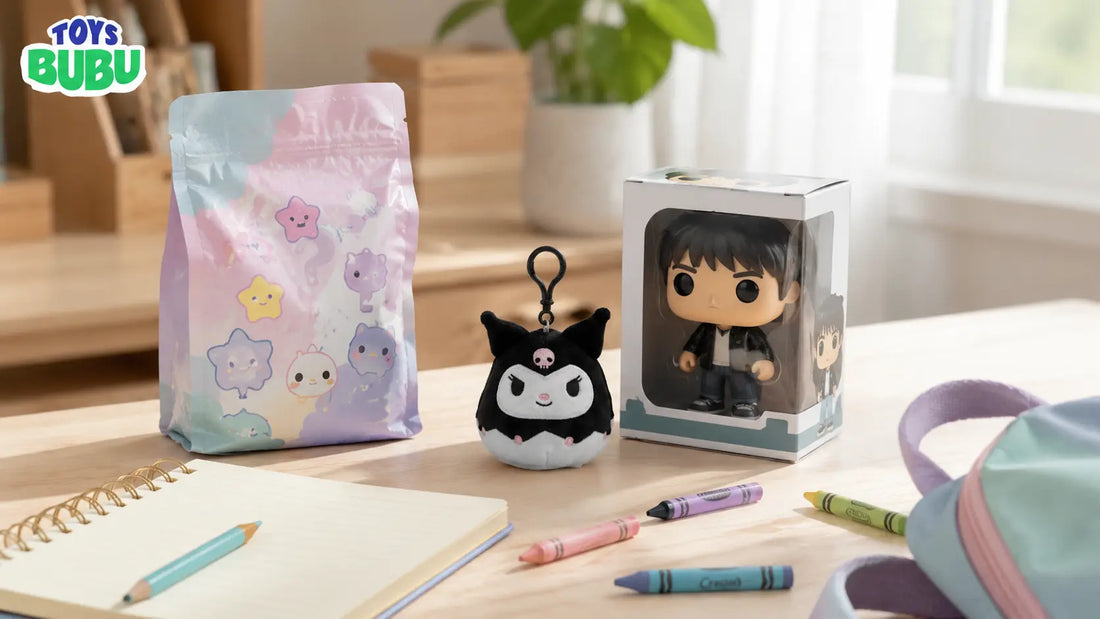
For travel, waiting rooms, or backpacks, soft keychain-style items can also give kids something small to hold. Parents who want portable options can explore ToysBubu’s portable toy accessories, including soft plush keychains such as the Sanrio Kuromi Squishmallow Plush Keychain.
The key is to watch the child, not just the toy. A quiet fidget may help one child and distract another. What matters most is whether the child stays connected to the task.
When Do Fidget Toys Become a Distraction?
Fidget toys become distractions when they take more attention than they give back.
A fidget is not helping if the child:
- stares at it instead of the book or paper
- keeps asking to switch toys
- throws it, spins it, or taps it loudly
- uses it to avoid starting work
- shows it to other children during task time
- turns it into pretend play during homework
- becomes upset when asked to put it away
This is why some fidget toys are not ideal for focus. Fast-spinning toys, bright lights, loud clicking, pop sounds, or toys with too many features can compete with the task.
For some children, a pop-it or spinner may feel fun, but too much fun can make focus harder. The toy starts asking for attention.
That does not mean fidget toys are bad. It means the wrong fidget, at the wrong time, can work against the goal.
Parents can also read Are Fidget Toys Good for Kids? for a balanced look at when fidgets support play and when they may become too distracting.
How Can Parents Tell If a Fidget Is Helping?
Parents do not need a complicated test. Just watch what happens during the task.
A fidget may be helpful if:
- The child starts the task with less resistance
- The child keeps working while holding it
- The child does not stare at it the whole time
- The movement stays quiet
- The child finishes more of the task
- The child can return the fidget when done
- The fidget does not bother anyone nearby
A fidget may not be helping if:
- work stops
- The child plays with the fidget instead of working
- The toy becomes noisy
- The child keeps switching fidgets
- The child uses it to delay the task
- The fidget causes arguments with siblings or classmates
The best question is not “Is this toy popular?” The best question is “Does this help my child stay with the task?”
If the answer is yes, keep it simple and use it only when needed. If the answer is no, put it away and try another support, such as a short movement break, a quieter workspace, a timer, or a smaller task.
How ToysBubu Helps Parents Choose Calm Fidget Options
ToysBubu focuses on toys that fit real family routines, not just trends. For fidget use, that means helping parents think about age, setting, sound, size, and how the toy will actually be used.
A toy that works during free play may not work during homework. A toy that feels fun in the car may not be right for a classroom. A soft plush fidget may be better for quiet comfort, while a collectible may be better saved for playtime or display.
Parents can use ToysBubu to find gentle, playful options that support screen-free routines, sensory play, travel, waiting time, and calm hands-on movement. The best choice is the one that fits the child, the moment, and the task.
Frequently Asked Questions
-
Do fidget toys help kids focus?
Fidget toys may help some kids focus when they are quiet, simple, and used during a task. They work best when the child can keep working while using the fidget. If the child stops working to play with it, the fidget is not helping.
-
Why do fidget toys help some kids with ADHD-style restlessness?
Some children focus better when their hands have a small movement outlet. A quiet fidget can give tactile input and reduce bigger movements like tapping, grabbing objects, or leaving the seat. Fidgets are not an ADHD treatment, but they may support some children during homework, reading, or waiting.
-
What type of fidget toy is best for focus?
The best focus fidgets are usually quiet, soft, simple, and easy to use without looking. Stress balls, textured handheld toys, soft squishies, and small plush sensory items are often better than loud, bright, or fast-spinning toys.
-
Can fidget toys distract kids?
Yes. A fidget can distract kids if it is noisy, flashy, too fun, or used like a toy. If a child watches it, throws it, clicks it, or stops working because of it, the fidget should be put away.
-
Should kids use fidget toys at school?
Some kids may benefit from school fidgets, but parents should check classroom rules first. A school fidget should be quiet, small, and used only to support attention. It should not distract classmates or interrupt the lesson.
-
How do I know if a fidget toy is working?
Watch the task. If your child keeps reading, writing, listening, or waiting while using the fidget, it may be helping. If the fidget becomes the main activity, it is probably not the right tool for that moment.
Conclusion
So, do fidget toys help kids focus? For some kids, yes - but only when the fidget is simple, quiet, and used with clear rules.
Fidget toys work best when they give the hands something small to do while the child keeps attention on homework, reading, listening, or waiting. They stop helping when they become loud, visual, exciting, or more interesting than the task.
For ADHD-style fidget use, parents should choose calm options, monitor the child's response, and treat the fidget as a tool. ToysBubu offers soft sensory toys and portable accessories that fit quiet routines, travel, and screen-free play when used properly.